
Pro Drift Car Setup Explained: Chassis, Suspension & Tire Strategy
Introduction: Beyond the Smoke and Style
Forget the surface-level spectacle of drifting—the tire smoke, aggressive liveries, and crowd-pleasing angle. Beneath that chaos lies a deeply engineered system designed for one purpose: controlled instability.
A professional drift car isn’t just built to go sideways—it’s engineered to sustain, control, and manipulate loss of traction with precision. From chassis rigidity to suspension geometry and tire strategy, every component is optimized for maximum angle, consistency, and responsiveness.
If you’ve ever wondered how Formula Drift cars achieve such extreme control, this is your deep dive into the mechanics behind the madness.
What Is a Pro Drift Car Setup?
A pro drift car setup is a specialized configuration of chassis, suspension, drivetrain, and tires designed to maximize steering angle, maintain controlled tire slip, and deliver predictable handling during high-speed drifting.
Unlike traditional performance cars that chase grip, drift cars are engineered to balance grip and slip simultaneously.
Why Chassis Rigidity and Weight Distribution Matter
The Role of Chassis Rigidity in Drift Control
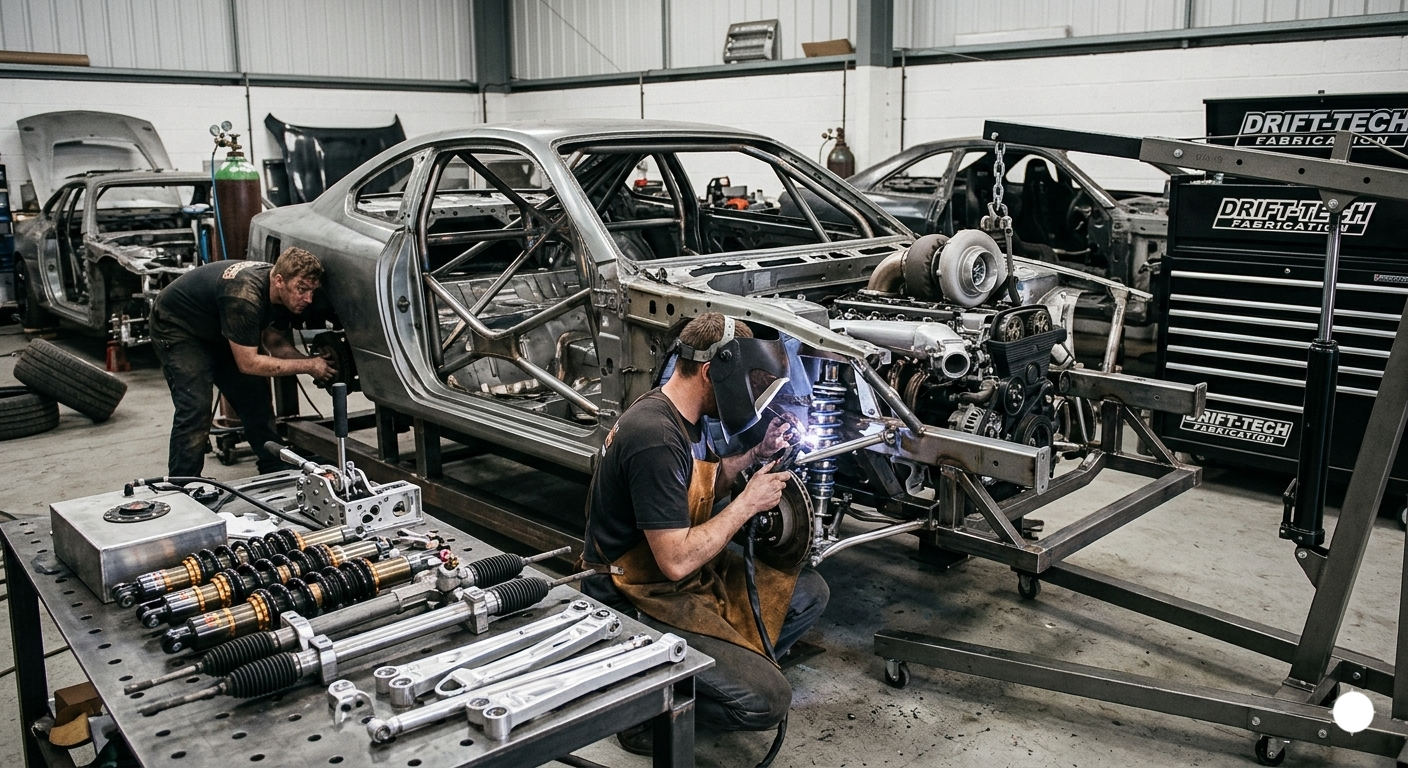
At the professional level, the chassis is more than a frame—it’s the foundation of consistency.
Drift cars use:
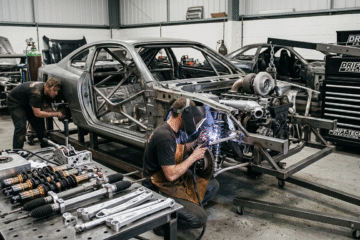
- Fully welded roll cages integrated into the chassis
- Reinforced unibody or custom spaceframe builds
This extreme rigidity ensures:
- Consistent suspension geometry under load
- Immediate feedback to the driver
- Stability during high lateral forces
Without rigidity, even the best suspension setup becomes unpredictable.
Ideal Weight Distribution for Drifting
Most pro drift cars aim for:
- 50/50 balance or
- Slight rear bias (52/48)
This is achieved by:
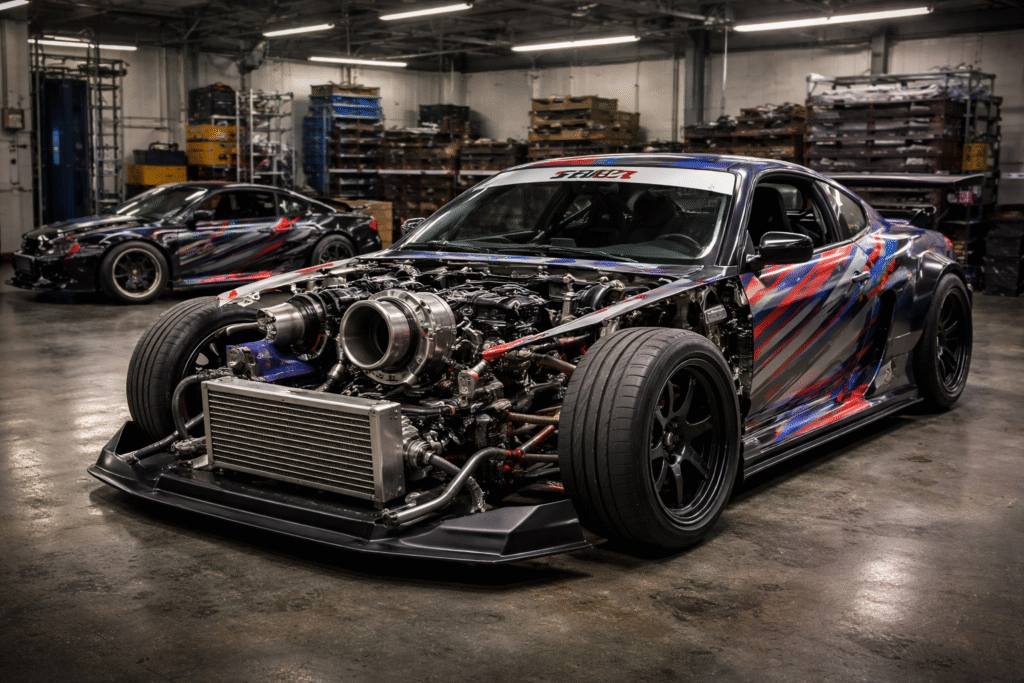
- Moving the engine rearward
- Relocating the fuel cell
- Adjusting driver position
A well-balanced car allows:
- Smooth transitions
- Predictable rotation
- Better angle control
Poor distribution leads to snap oversteer or understeer—both deadly in competition.
How Power Delivery Works in Pro Drift Cars
Why 800–1200 HP Isn’t About Speed!
Pro drift cars produce massive power—but it’s not about top speed.
It’s about:
- Maintaining wheelspin
- Controlling throttle response
- Sustaining long drifts
Engine Management Systems (EMS)
Advanced systems like standalone ECUs allow drivers to:
- Fine-tune throttle mapping
- Control boost levels
- Adjust torque delivery
This ensures precision over raw aggression.
Differential Setup: LSD vs Welded
A proper drift setup requires:
- 2-way LSD or
- Fully welded differential
This ensures:
- Equal power delivery to both rear wheels
- Consistent tire spin
- Stable drift initiation
Any imbalance here kills control instantly.
Sequential Transmissions and Torque Flow
Sequential gearboxes allow:
- Lightning-fast shifts
- No power interruption
- Continuous torque delivery
This keeps the car stable mid-drift and during transitions.
Drift Suspension Setup Explained
This is where pro drift cars truly separate from street builds.
What Is Caster Angle in Drifting?
High positive caster (7–10+ degrees):
- Improves steering return
- Increases dynamic camber gain
- Enhances driver feedback
This helps drivers feel the edge of grip.
Camber Setup for Maximum Contact
Typical setup:
- Front: -2 to -5 degrees
- Rear: -0.5 to -2 degrees
Front camber maximizes grip at angle, while rear camber balances traction and slip.
Toe Settings for Stability and Transitions
- Front toe-out improves turn-in response
- Rear toe-in stabilizes the car under throttle
Incorrect toe settings can make the car twitchy or sluggish.
How Steering Angle Kits Enable Extreme Drifting
Modified components allow:
- 60–70+ degrees of steering lock
This enables:
- Extreme drift angles
- More aggressive lines
- Better recovery from mistakes
Coilovers and Sway Bar Tuning
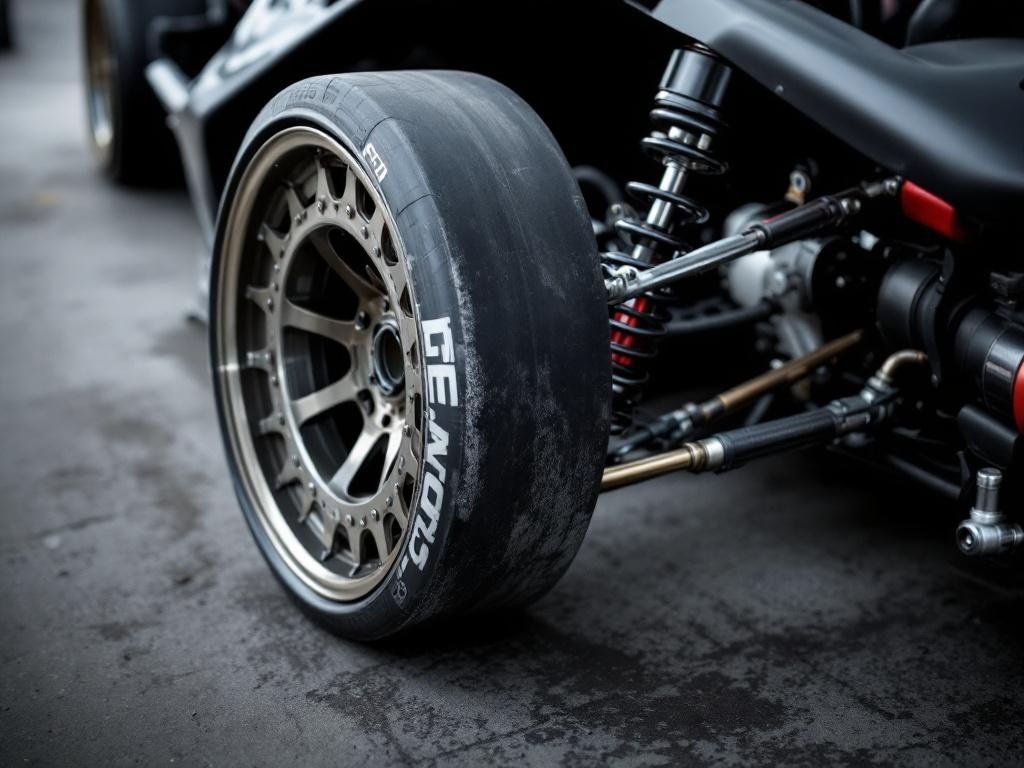
High-end adjustable coilovers provide:
- Control over compression and rebound
- Fine-tuned weight transfer
Sway bars help balance:
- Oversteer vs understeer
- Body roll during transitions
What Tires Do Pro Drift Cars Use?
Why Drift Tires Balance Grip and Slip
Unlike racing tires, drift tires must:
- Provide initial grip
- Break traction predictably
- Generate consistent smoke
Ideal Tire Pressure for Drifting
Typical setup:
- Rear: 30–50+ PSI
- Front: Lower pressure for grip
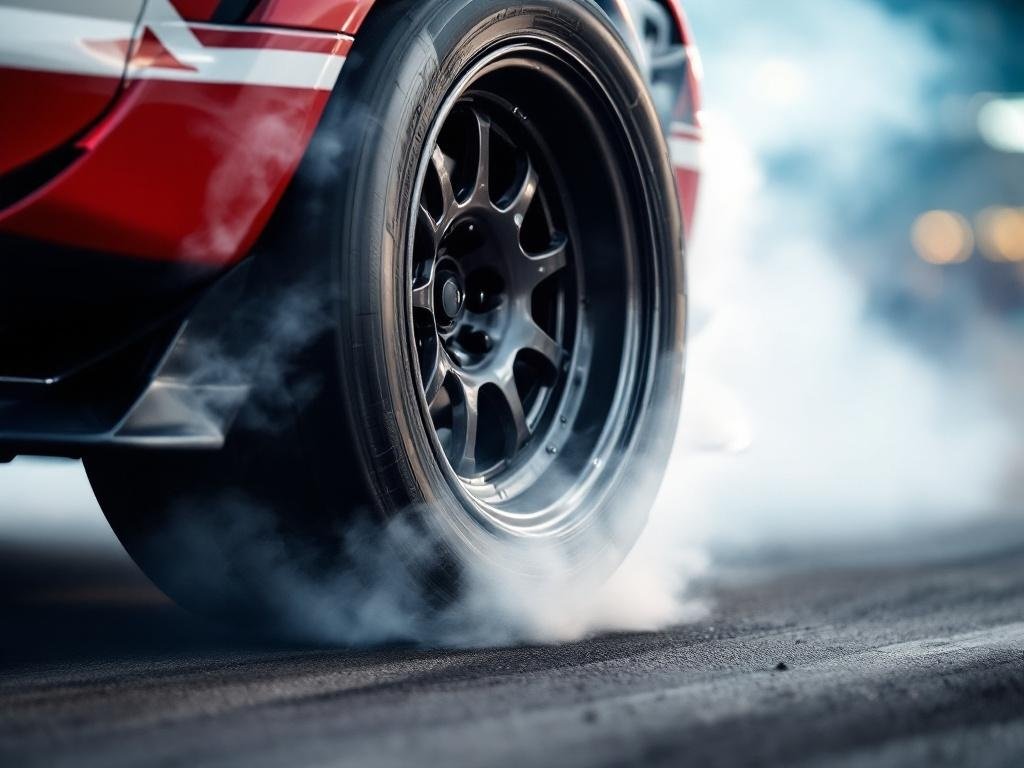
Higher rear pressure:
- Reduces contact patch
- Increases slip
- Boosts smoke output
Tire Wear and Heat Management
Teams constantly monitor:
- Temperature
- Wear patterns
- Pressure changes
A single event can burn through dozens of tires.
How Braking Systems Control Drift Cars
What Does a Hydraulic Handbrake Do?
The hydraulic handbrake:
- Locks rear wheels instantly
- Initiates drifts
- Adjusts angle mid-corner
It’s one of the most critical tools in drifting.
Brake Bias Explained for Drift Control
Front-biased braking:
- Prevents rear instability
- Allows controlled deceleration
Drivers use braking not to stop—but to shape the drift.
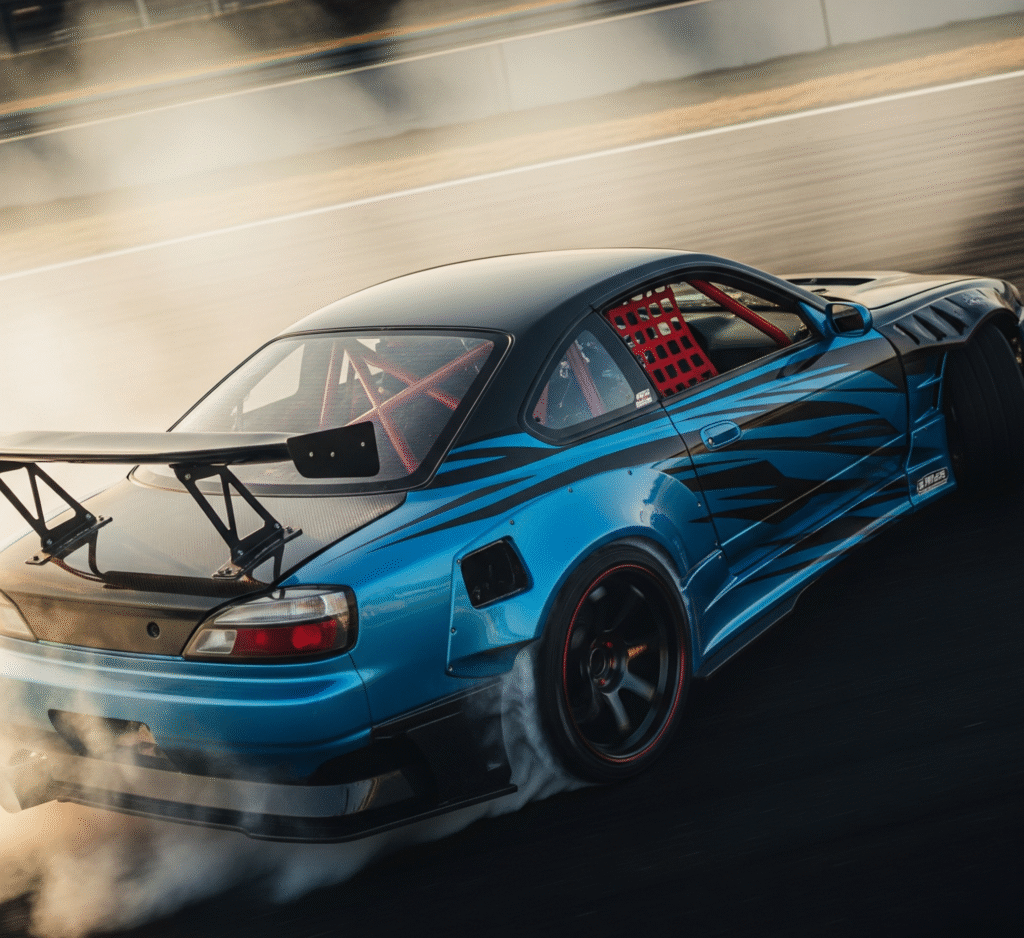
How Drivers and Engineers Fine-Tune Drift Cars
Data Logging and Telemetry
Modern drift cars track:
- Steering angle
- G-forces
- Suspension movement
- Tire temps
This data helps optimize performance down to tiny margins.
Driver Feedback Loop
The best setups come from:
- Driver feel
- Engineer adjustments
- Continuous iteration
This relationship turns a good car into a winning one.
Common Drift Setup Mistakes
Avoid these critical errors:
- Overly stiff suspension (kills grip and transition flow)
- Poor weight distribution (leads to instability)
- Incorrect tire pressure (affects smoke and control)
- Weak steering angle setup (limits performance ceiling)
Beginner vs Pro Drift Car Setup Differences
Beginner Setup
- Simpler suspension
- Lower power
- Minimal adjustability
Pro Setup
- Fully adjustable geometry
- High horsepower
- Data-driven tuning
The difference is precision, not just power.
Final Thoughts: The Science of Controlled Chaos
At its core, drifting is a paradox.
It’s about losing control—perfectly.
A pro drift car setup blends:
- Engineering precision
- Mechanical durability
- Driver intuition
Together, they transform raw horsepower into a controlled, high-speed ballet of smoke, angle, and precision.
FAQs
What suspension setup is best for drifting?
A drift suspension setup uses high caster, negative camber, toe-out in the front, and stiff but balanced coilovers to maximize control and steering angle.
Why do drift cars use high tire pressure?
High rear tire pressure reduces grip, increases slip, and helps generate more tire smoke during drifting.
How do Formula Drift cars get so much angle?
They use modified steering knuckles, extended control arms, and angle kits that allow over 60 degrees of steering lock.
What differential is best for drifting?
A 2-way limited-slip differential or a welded differential is best, as it ensures both rear wheels spin evenly.

Passionate car enthusiast and content writer, bringing you the latest from the world of horsepower and high-octane. Falak Thakur combines a love for all things automotive with a talent for crafting compelling stories.