
Beyond 2026: Decoding the Next Big Disruptors in Indian Automotive Tech & Design
The Indian automotive landscape, perpetually dynamic and relentlessly evolving, stands at the precipice of a new era. While industry chatter often oscillates around immediate launches and short-term trends leading up to 2026, the discerning eye of Carverseindia.com looks further, peering into a technologically imbued future between 2027 and 2030. We’re not just talking about incremental updates; we’re envisioning a paradigm shift, where cutting-edge technology and radical design philosophies redefine what it means to own and experience a vehicle in India. This isn’t a mere forecast; it’s a deep dive into the very fabric of tomorrow’s motoring reality, where innovation isn’t just a feature, but the core identity.
The Deep Learning Frontier: AI in Autonomous Driving and Predictive Personalisation
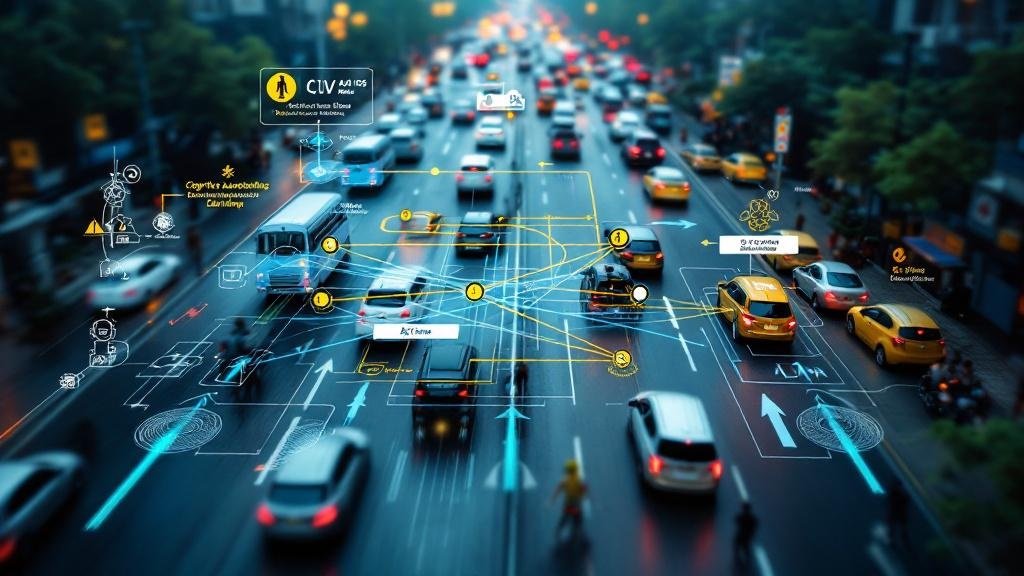
Beyond Level 2 and 3 autonomy, which are becoming commonplace, the late 2020s will witness a profound evolution in AI’s role within Indian vehicles. Consider not just autonomous driving, but truly sentient mobility. Future Indian cars will move from merely reacting to their environment to actively understanding and anticipating it, navigating the chaotic dance of Indian roads with an unprecedented level of precision and safety. This isn’t just about cameras and sensors; it’s about sophisticated deep learning models that process vast datasets of real-time traffic patterns, local driving behaviours, and even hyper-local weather anomalies.
This advanced AI will manifest in several critical ways:
- Cognitive Autonomous Systems: Forget pre-programmed routes. Vehicles will dynamically learn and adapt to unique driving styles, traffic conditions, and driver preferences. Imagine a car that truly understands your commute and makes intelligent decisions to optimize it, not just for speed, but for comfort and efficiency. It will seamlessly integrate with evolving urban infrastructures, communicating with smart traffic signals and other vehicles in real-time, reducing congestion and improving flow, a critical need for Indian metros.
- Predictive Maintenance & Diagnostics: AI-powered systems will move beyond routine service reminders. They will continuously monitor every component, predicting potential failures before they occur with remarkable accuracy. This means fewer breakdowns, less downtime, and a significantly enhanced ownership experience. Components will communicate their wear and tear proactively, allowing for modular replacements rather than reactive repairs.
- Hyper-Personalised In-Car Experiences: The days of one-size-fits-all infotainment are numbered. AI will craft bespoke environments for each occupant. From adaptive climate control that learns individual comfort zones to soundscapes tailored to mood and predictive content delivery based on past preferences, the car will become an extension of the individual, not just a mode of transport. Think of a vehicle that anticipates your preferred Spotify playlist as you leave the office or adjusts cabin lighting to match the twilight hours. This level of personalization extends to health monitoring, with integrated sensors tracking vital signs and offering alerts or even adjusting driving parameters if fatigue or stress is detected.
The cultural implications of such advanced AI are profound. As vehicles become more intelligent, the trust dynamic between human and machine will cement. For India’s aspirational and tech-savvy demographic, these features won’t be luxuries but necessities, defining the premium experience.
Sustainable Material Innovations: Reshaping Form and Function
The drive for sustainability will transcend just powertrain choices; it will fundamentally alter the materials used in manufacturing. Beyond 2026, Indian automotive manufacturers, both local and international, will increasingly integrate groundbreaking sustainable materials, pushing the boundaries of circular economy principles. This isn’t merely about using recycled plastics; it’s about pioneering new composites and bio-materials that offer superior performance alongside dramatically reduced environmental footprints.
Consider these exciting possibilities:
- Advanced Bio-Composites: We’ll see an accelerated adoption of materials derived from natural fibres like bamboo, flax, and even agricultural waste. These won’t just be for interior trim; advanced bio-composites will find their way into structural components, offering comparable strength-to-weight ratios as traditional metals but with significantly lower embodied energy. Imagine car panels that are grown, not manufactured, offering unprecedented biodegradability at the end of life.
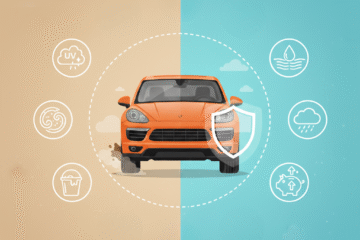
- Self-Healing Polymers & Coatings: Small scratches and dents? A thing of the past. Nanotechnology embedded in polymers and paint will allow minor damage to spontaneously repair, enhancing vehicle longevity and reducing maintenance costs. This also extends to interior surfaces, making cabins more resilient to daily wear and tear. This is particularly relevant in India, where roads and driving conditions can be challenging, as explored in articles like “How Often You Should Detail Your Car in India: The Complete Seasonal & DIY Guide.”
- Recyclable & Upcyclable Metal Alloys: Metallurgy will see a revolution, with the development of alloys that are not only lighter and stronger but also infinitely recyclable without degradation of properties. This will extend the lifecycle of raw materials, reducing reliance on virgin resources. Furthermore, additive manufacturing (3D printing) will enable on-demand production of complex parts using these advanced materials, reducing waste and allowing for greater customization.
- Phase-Change Materials for Thermal Management: These innovative materials will be integrated into cabin linings and battery packs to regulate temperature passively. This means less reliance on active cooling and heating systems, leading to energy savings for EVs and increased comfort for occupants, especially during India’s extreme summers.
The implications for design are enormous. Designers will have a broader palette of textures, colours, and forms, unconstrained by conventional material limitations. This could lead to organically sculpted interiors and exteriors, with a focus on tactile sensations and a seamless blend of technology and nature.
Beyond the Wheel: Redefining In-Car Experiences and Digital Ecosystems
The car of the future will be less a machine and more a nodal point within a vast, interconnected digital ecosystem. OEMs will increasingly focus on monetizing the in-car experience, transitioning from purely selling vehicles to offering subscription-based services and bespoke digital environments. This goes far beyond current infotainment systems.
The transformation will encompass:
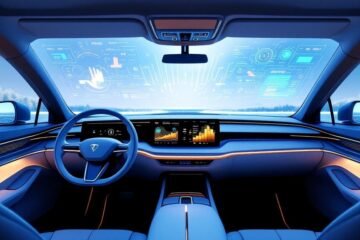
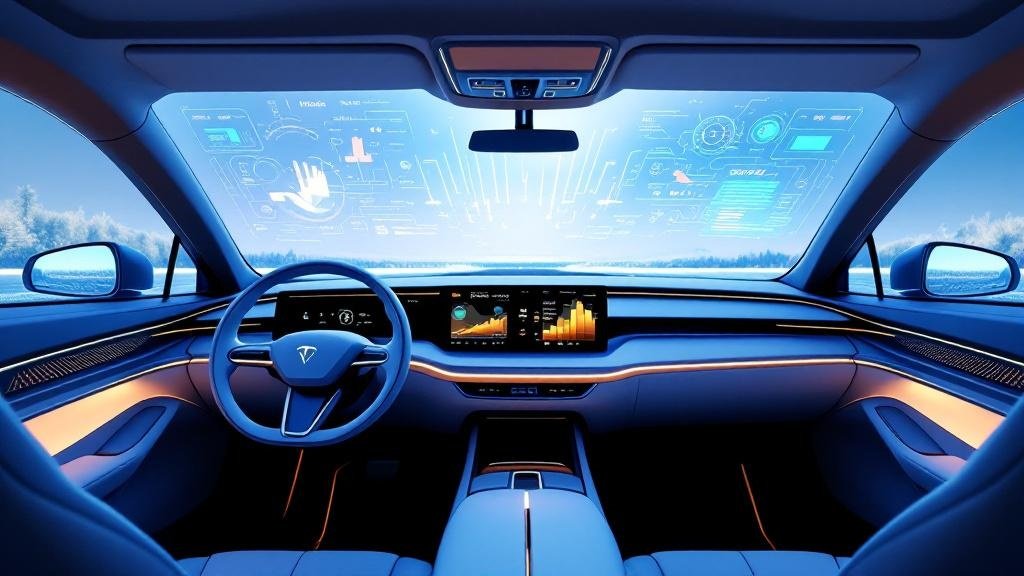
- Augmented Reality Windshields & Immersive Displays: The traditional dashboard will become obsolete, replaced by augmented reality projected onto the windshield. Navigation, points of interest, driver assistance warnings, and even entertainment will be seamlessly overlaid onto the real-world view. Imagine a virtual co-pilot guiding you through unfamiliar city streets or highlighting historical landmarks as you drive past.
- Biometric Authentication & Seamless Integration: Your car will recognize you, not just by key, but by facial recognition, fingerprint, or even gait. It will then adjust every setting – seat position, mirrors, climate, music – precisely to your preference. Furthermore, the vehicle will seamlessly integrate with your personal digital life, from smart home devices to office calendars, creating an uninterrupted continuum of connectivity. Think of having your garage door open automatically as you approach, or your home lights turning on just before you arrive. This frictionless interaction reflects the demands of a digitally native generation.
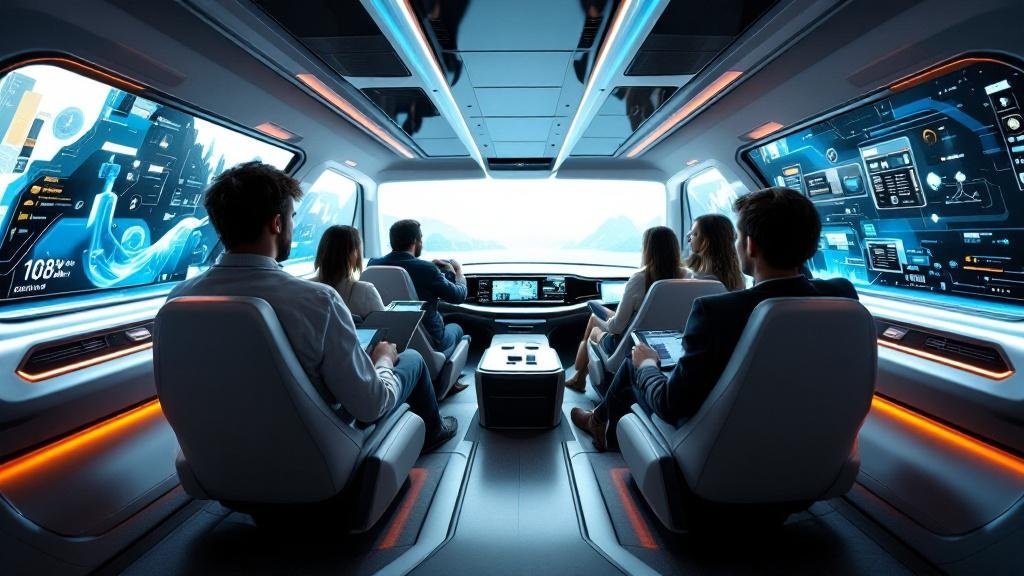
- The Car as a Workspace/Entertainment Hub: As autonomous driving capabilities mature, the perception of in-car time will shift. The cabin will transform into a versatile space for work, entertainment, or relaxation. Swivelling seats, modular interiors, integrated productivity suites, and high-fidelity audio-visual systems will turn commute times into productive or leisure hours. This is especially pertinent for professionals in India’s bustling cities, where commute times are significant.
- Wellness & Sensory Experiences: Beyond functional features, the future will emphasize holistic well-being. Cars will incorporate elements like ambient lighting therapies, advanced air purification systems, integrated aroma diffusers, and personalised soundscapes to reduce stress and enhance comfort. The car becomes a sanctuary, offering a reprieve from the external world.
This focus on an integrated digital life within the vehicle is already hinted at by manufacturers adopting smart connectivity features, but the scale and depth of integration beyond 2026 will be revolutionary. Brands like Mahindra, with their “Born Electric” vision for EVs, are already laying the groundwork for such connected ecosystems, as detailed in our analysis: “Mahindra’s ‘Born Electric’ Vision Redefines India’s EV Future.”
Design Philosophies: Form Follows AI and Sustainability
The aesthetic revolution will be driven by the aforementioned technological advancements. Design will no longer be an afterthought but inextricably linked to the underlying tech and material choices.
Future design principles will likely include:
- Minimalist, Biophilic Interiors: As complex controls migrate to voice commands and augmented reality, dashboards will become drastically simplified, often featuring large, customizable digital canvases. The integration of sustainable materials will lead to organic textures and forms, blurring the lines between nature and technology. Think of seamlessly integrated displays that appear only when needed, and surfaces that feel natural to the touch.
- Aerodynamic Efficiency as an Art Form: The relentless pursuit of range for EVs and fuel efficiency for ICE vehicles will push aerodynamic design to new extremes. Expect flowing, uninterrupted lines, innovative wheel designs that manage air vortices, and active aerodynamic elements that dynamically adjust. This will result in vehicles that look inherently futuristic and incredibly purposeful.
- Modular & Customizable Exteriors: The modularity enabled by advanced manufacturing techniques could extend to exterior panels. Imagine being able to select different body kits, lighting signatures, or even entire sections of your car based on your mood or requirement, a true reflection of personalized expression. This takes inspiration from concept cars that test the boundaries of customization, much like the MINI’s Latest Concepts Celebrate Imperfection.
- Human-Centric Illumination: Advanced lighting systems will go beyond mere aesthetics. Intelligent external lighting will communicate vehicle intent to pedestrians and other drivers, enhancing safety. Inside, adaptive ambient lighting will adjust to the occupants’ circadian rhythms, improving comfort and reducing fatigue on long journeys.
The Road Ahead: A Vision, Not Just a Prediction
The Indian automotive market, with its blend of unique challenges and rapid technological adoption, is perfectly poised to embrace these future disruptions. The blend of affordability, sophistication, and sustainability will be the key drivers. The journey beyond 2026 isn’t just about faster, fancier cars; it’s about reimagining mobility as an intelligent, integrated, and intensely personalized experience. The next wave of innovation will not just transport us, but transform us, leaving an indelible mark on how we interact with our world. This is the future Carverseindia.com is tracking, and we invite you to join us on this exhilarating journey.

Passionate car enthusiast and content writer, bringing you the latest from the world of horsepower and high-octane. Falak Thakur combines a love for all things automotive with a talent for crafting compelling stories.